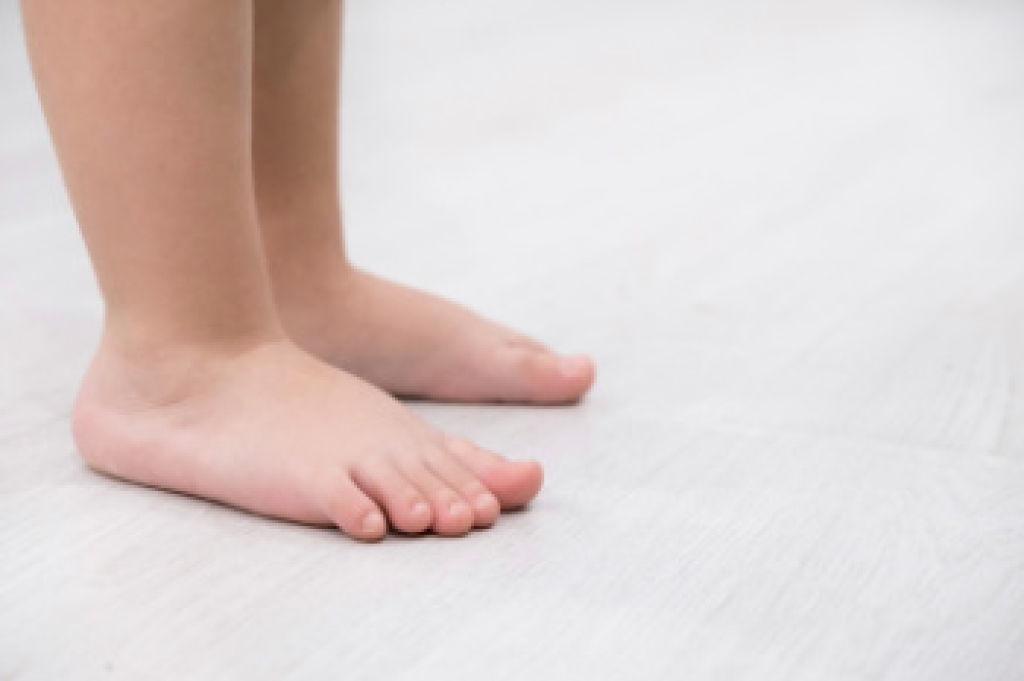
Flat Feet in Children and What Parents Should Know

Flat feet in children, often referred to as pediatric flatfoot, is a condition in which the arch of the foot does not fully develop. This causes the entire sole to come into contact with the ground. This is common in infants and younger children, as the arch typically forms gradually as muscles strengthen and bones mature. In many cases, flat feet resolve naturally with growth. However, when the condition persists or begins to cause symptoms, it may affect posture, balance, and overall movement patterns. A clear understanding of flat feet can help parents determine when observation is appropriate and when professional evaluation is needed. The symptoms of flat feet in children can range from mild to more noticeable concerns. Some children remain symptom free, while others may report aching in the feet, heel discomfort, or fatigue after activity. Parents may observe that the ankles roll inward, a pattern known as overpronation, or that shoes wear unevenly over time. Children may also avoid physical activities that involve running or prolonged standing due to discomfort. These signs can indicate that the structure of the foot is influencing stability and alignment.

There are several causes and risk factors associated with pediatric flatfoot. Genetics is one of the most common influences, as children may inherit flexible foot structures or low arches from family members. Additional contributors include ligament laxity, muscle weakness, or differences in bone development. Excess body weight can increase stress on the feet and contribute to arch flattening. In some cases, flat feet may be linked to underlying neurological or developmental conditions that affect coordination and muscle control.

While flat feet are often a normal part of early development, ongoing symptoms should not be overlooked. Early recognition and evaluation can support proper alignment and help prevent long-term strain on the feet and lower extremities. If your child is experiencing discomfort or difficulty with movement, it is suggested you consult a podiatrist for an accurate diagnosis and guidance on appropriate care and management.

Flatfoot is a condition many people suffer from. If you have flat feet, contact Cathy Coker, DPM from Arch Advantage Foot & Ankle Center. Our doctor will treat your foot and ankle needs.

What Are Flat Feet?

Flatfoot is a condition in which the arch of the foot is depressed and the sole of the foot is almost completely in contact with the ground. About 20-30% of the population generally has flat feet because their arches never formed during growth.

Conditions & Problems:

Having flat feet makes it difficult to run or walk because of the stress placed on the ankles.

Alignment – The general alignment of your legs can be disrupted, because the ankles move inward which can cause major discomfort.

Knees – If you have complications with your knees, flat feet can be a contributor to arthritis in that area.  

Symptoms

  • Pain around the heel or arch area
  • Trouble standing on the tip toe
  • Swelling around the inside of the ankle
  • Flat look to one or both feet
  • Having your shoes feel uneven when worn

Treatment

If you are experiencing pain and stress on the foot you may weaken the posterior tibial tendon, which runs around the inside of the ankle. 

If you have any questions, please feel free to contact our office located in Indianapolis, IN . We offer the newest diagnostic and treatment technologies for all your foot care needs.


Read more about Flat Feet

Understanding Different Types of Foot Pain

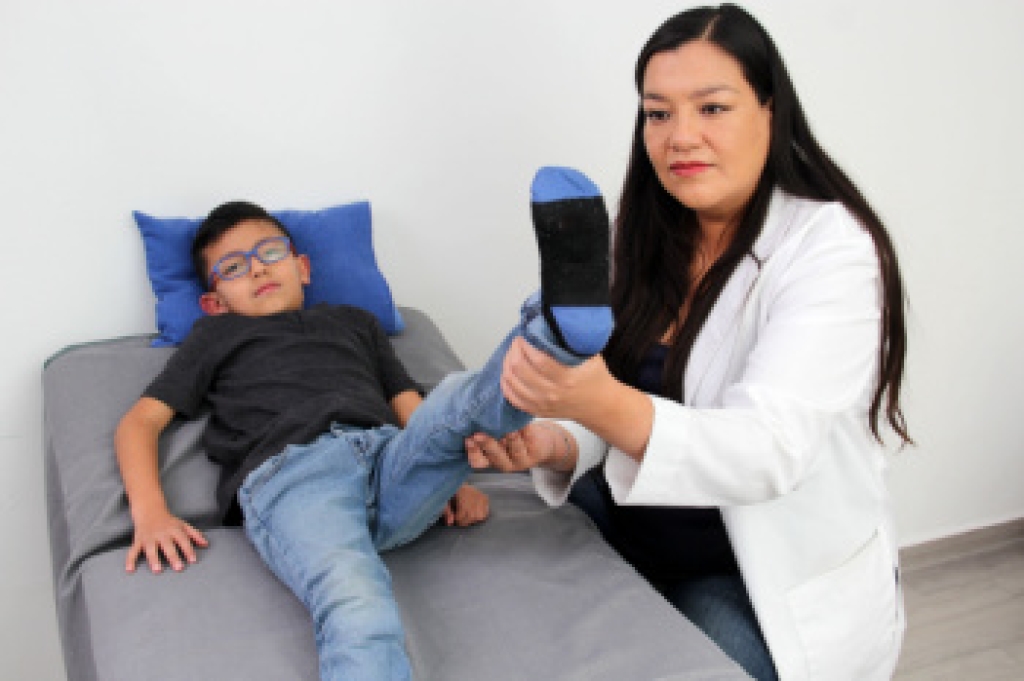
Foot pain can develop in many areas, and the location often helps identify the cause. Heel pain is commonly linked to plantar fascia irritation, tendon strain, or stress injuries. Pain in the ball of the foot may result from pressure overload, nerve irritation, joint inflammation, or structural changes. Arch pain can stem from ligament strain, tendon problems, or biomechanical imbalance. Toe pain may be related to arthritis, deformities, fractures, or nail conditions. Pain along the top of the foot sometimes points to tendon inflammation, stress fractures, or compression from footwear. Inner or outer foot pain may involve ligaments, tendons, joint wear, or alignment problems. Burning, tingling, or numb pain may suggest nerve involvement rather than a structural injury. Because foot pain can have many causes, an accurate diagnosis is important for effective treatment. If you are experiencing ongoing foot discomfort, worsening pain, or difficulty walking, it is suggested that you visit a podiatrist for a thorough evaluation and appropriate treatment solutions.

Foot Pain

Foot pain can be extremely painful and debilitating. If you have a foot pain, consult with Cathy Coker, DPM from Arch Advantage Foot & Ankle Center. Our doctor will assess your condition and provide you with quality foot and ankle treatment.

Causes

Foot pain is a very broad condition that could be caused by one or more ailments. The most common include:

  • Bunions
  • Hammertoes
  • Plantar Fasciitis
  • Bone Spurs
  • Corns
  • Tarsal Tunnel Syndrome
  • Ingrown Toenails
  • Arthritis (such as Gout, Rheumatoid, and Osteoarthritis)
  • Flat Feet
  • Injury (from stress fractures, broken toe, foot, ankle, Achilles tendon ruptures, and sprains)
  • And more

Diagnosis

To figure out the cause of foot pain, podiatrists utilize several different methods. This can range from simple visual inspections and sensation tests to X-rays and MRI scans. Prior medical history, family medical history, and any recent physical traumatic events will all be taken into consideration for a proper diagnosis.

Treatment

Treatment depends upon the cause of the foot pain. Whether it is resting, staying off the foot, or having surgery; podiatrists have a number of treatment options available for foot pain.

If you have any questions, please feel free to contact our office located in Indianapolis, IN . We offer the newest diagnostic and treatment technologies for all your foot care needs.
Read more about Foot Pain

Are Bunions Affecting Your Everyday Life?

Have you noticed a bony protrusion on the side of your big toe? If so, you may have developed the foot condition known as a bunion. Don't let bunions interfere with your daily activities.

When Your Child Has Arthritis

Juvenile arthritis causes joint pain and swelling in children. It can affect the feet, ankles, knees, and other joints, making it harder for a child to walk, run, or stay active. Symptoms include stiffness in the morning, swollen joints, and pain while walking. Children may also feel tired or develop warmth and redness around the joints. When the feet and ankles are affected, children may limp or avoid certain activities because of discomfort. A podiatrist can examine how the child walks and check for joint changes in the feet. Treatment includes custom orthotics, supportive footwear, and braces that help reduce pressure on painful joints. Stretching exercises and monitoring foot growth can also help improve comfort and movement. If your child has foot or ankle pain linked to arthritis, it is suggested that you make an appointment with a podiatrist for an exam and treatment options.

Arthritis can be a difficult condition to live with. If you are seeking treatment, contact Cathy Coker, DPM from Arch Advantage Foot & Ankle Center. Our doctor can provide the care you need to keep you pain-free and on your feet.

Arthritic Foot Care  

Arthritis is a term that is commonly used to describe joint pain.  The condition itself can occur to anyone of any age, race, or gender, and there are over 100 types of it.  Nevertheless, arthritis is more commonly found in women compared to men, and it is also more prevalent in those who are overweight. The causes of arthritis vary depending on which type of arthritis you have. Osteoarthritis for example, is often caused by injury, while rheumatoid arthritis is caused by a misdirected immune system.

Symptoms

  • Swelling
  • Pain
  • Stiffness
  • Decreased Range of Motion

Arthritic symptoms range in severity, and they may come and go. Some symptoms stay the same for several years but could potentially get worse with time. Severe cases of arthritis can prevent its sufferers from performing daily activities and make walking difficult.

Risk Factors

  • Occupation – Occupations requiring repetitive knee movements have been linked to osteoarthritis
  • Obesity – Excess weight can contribute to osteoarthritis development
  • Infection – Microbial agents can infect the joints and trigger arthritis
  • Joint Injuries – Damage to joints may lead to osteoarthritis
  • Age – Risk increases with age
  • Gender –Most types are more common in women
  • Genetics – Arthritis can be hereditary

If you suspect your arthritis is affecting your feet, it is crucial that you see a podiatrist immediately. Your doctor will be able to address your specific case and help you decide which treatment method is best for you.

If you have any questions please feel free to contact our office located in Indianapolis, IN . We offer the newest diagnostic tools and technology to treat your foot and ankle needs.

Read more about How to Care for Your Arthritic Foot

Understanding Corns and How They Differ From Calluses

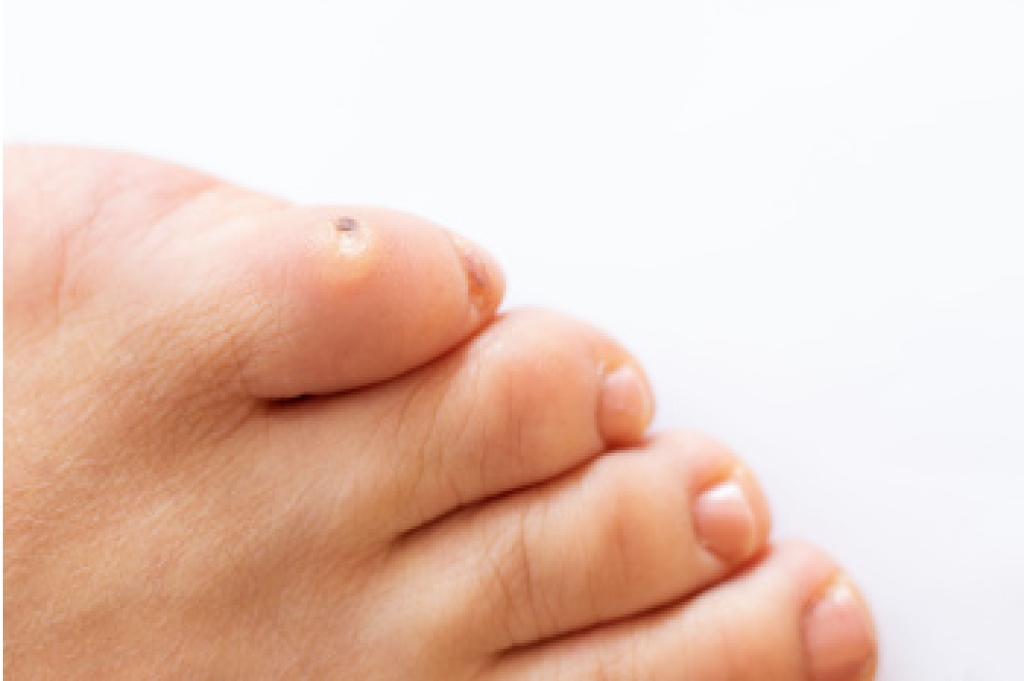
A corn is a small, thickened area of skin that develops as a protective response to repeated friction and pressure. Corns are usually smaller and deeper than calluses, and may have a hard center that can cause tenderness. Calluses tend to be larger, flatter areas of thickened skin that form over wider regions. Corns often appear on the side of the feet from wearing tight shoes, while calluses may develop on the ball of the foot from activities such as running barefoot. Risk factors include poor footwear, repetitive motion, and foot structure. A podiatrist can safely treat corns, reduce pressure, and recommend proper footwear to prevent recurrence. Corns can be painful, and may cause difficulty in completing daily activities. If you have a foot corn, it is suggested that you consult a podiatrist who can offer you effective relief and treatment solutions.

Corns can make walking very painful and should be treated immediately. If you have questions regarding your feet and ankles, contact Cathy Coker, DPM of Arch Advantage Foot & Ankle Center. Our doctor will treat your foot and ankle needs.

Corns: What Are They? And How Do You Get Rid of Them?
Corns are thickened areas on the skin that can become painful. They are caused by excessive pressure and friction on the skin. Corns press into the deeper layers of the skin and are usually round in shape.

Ways to Prevent Corns
There are many ways to get rid of painful corns such as:

  • Wearing properly fitting shoes that have been measured by a professional
  • Wearing shoes that are not sharply pointed or have high heels
  • Wearing only shoes that offer support

Treating Corns

Although most corns slowly disappear when the friction or pressure stops, this isn’t always the case. Consult with your podiatrist to determine the best treatment option for your case of corns.

If you have any questions, please feel free to contact our office located in Indianapolis, IN . We offer the newest diagnostic and treatment technologies for all your foot care needs.
Read more about Understanding Corns and Calluses

Connect With Us

Advanced Podiatric Procedures & Services in the Marion County, IN: Indianapolis, Lawrence, Beech Grove, Speedway, Southport, Pike Township, Warren Township, Franklin Township, Hendricks County, IN: Brownsburg, Avon, Plainfield, Danville, Hamilton County, IN: Carmel, Fishers, Noblesville, Westfield, Noblesville, Johnson County, IN: Greenwood, Franklin, Whiteland, Bargersville, Morgan County, IN: Mooresville, Martinsville areas
Request Appointment